


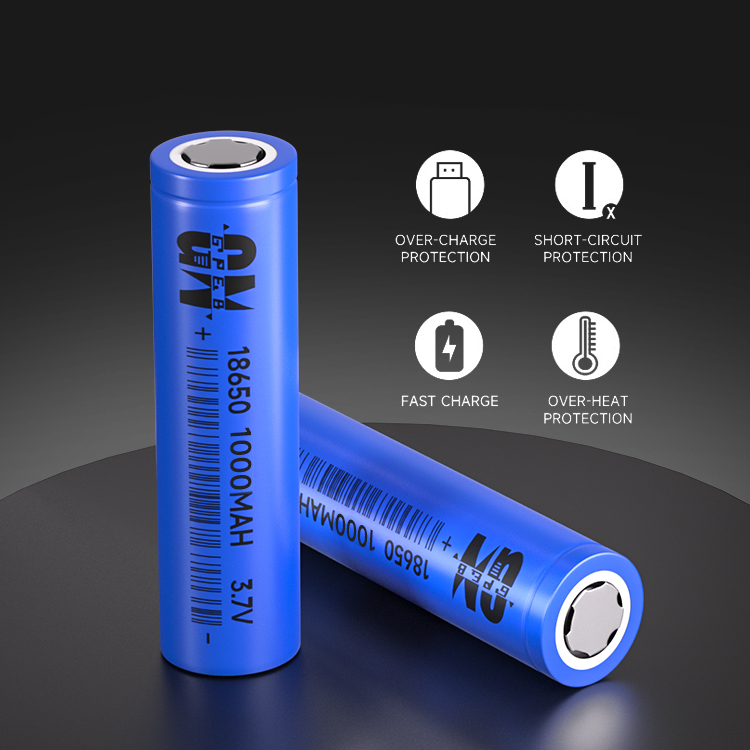
Introduction: Researchers at the University of Queensland and Brisbane-based Graphene Manufacturing Group (GMG) are collaborating to develop a faster-charging, more sustainable battery prototype that can last three times longer than current lithium-ion batteries. The 'graphene revolution' is coming, and Australian scientists who specialize in aluminum-ion batteries are now working with a Brisbane-based graphene manufacturing group to commercialize a technology that could transform energy storage
Introduction: Researchers at the University of Queensland and Brisbane-based Graphene Manufacturing Group (GMG) are collaborating to develop a faster-charging, more sustainable battery prototype that can last three times longer than current lithium-ion batteries.
The "graphene revolution" is coming, and Australian scientists who specialize in aluminum-ion batteries are now working with a Brisbane-based graphene manufacturing group to commercialize a technology that could transform energy storage.
GMG, which recently listed on Canada's TSX Venture Exchange, has entered into a research agreement with scientists at the University of Queensland's Australian Institute of Bioengineering and Nanotechnology (AIBN) to develop solutions for everything from watches to grid storage and everything in between. Make batteries for everything, including phones, laptops and electric cars.
The UQ technology, which pairs aluminum-ion batteries with graphene electrodes, was devised by Professors Michael Yu, Xiaodan Huang and postdoctoral student Yueqi Kong as a way of making graphene into more efficient electrodes to power the batteries. The technology has been patented and licensed from UniQuest, the University of Queensland's commercialization company.
Low temperature lithium iron phosphate battery 3.2V 20A -20℃ charging, -40℃ 3C discharge capacity ≥70%
Charging temperature: -20~45℃ -Discharge temperature: -40~+55℃ -40℃ Support maximum discharge rate: 3C -40℃ 3C discharge capacity retention rate ≥70%
Click for details
Graphene is the wonder material of our time. It's the thinnest and strongest material known to science, and if that wasn't enough, it's also a great conductor of electricity - even better than copper.
Essentially, graphene is just good old carbon, but it's tessellated in such a way that incredibly strong bonds occur between atoms.
Still, UQ and GMG are not the only ones making progress. In March, scientists from Dalian University of Technology in my country and the University of Nebraska in the United States collaborated to create a battery composed of a pure aluminum anode, a graphene cathode and an organic electrolyte.
Back in 2019, scientists at Royal Melbourne Institute of Technology (RMIT) demonstrated a laser printing process that allowed graphene supercapacitors to be embedded directly into textiles, creating a fabric that could store energy and integrate with solar cells. Used to power smart fabric applications.
AIBN Director Professor Alan Rowan said: "Tests have shown that rechargeable graphene aluminum-ion batteries have three times the battery life of currently leading lithium-ion batteries. The higher power density means they can charge up to 70 times faster."
Low temperature and high energy density 18650 3350mAh-40℃ 0.5C discharge capacity ≥60%
Charging temperature: 0~45℃ Discharge temperature: -40~+55℃ Specific energy: 240Wh/kg -40℃ Discharge capacity retention rate: 0.5C Discharge capacity ≥ 60%
"This battery can be recharged through more cycles without loss of performance and is easier to recycle, reducing the possibility of harmful metals leaching into the environment," Rowan said.
UniQuest CEO Dean Moss said he believes aluminum-ion batteries with graphene electrodes can transform the existing rechargeable battery market. Lithium-ion batteries require large amounts of water to extract rare earth materials and are processed using chemicals that can harm the environment.
It is understood that scientists from the University of Queensland received a three-year A$390,000 (US$303,600) grant from the Australian Research Council Linkage Project in 2020 to develop graphene aluminum ion technology.

Popular recommendation
18650 lithium battery 3000mah.What is the progress of the important technology of lithium-ion batter
2023-10-0818650 li ion battery.What is the production process of ternary cathode materials for lithium-ion bat
2023-10-08CR1625 battery.LG successfully developed the world's most efficient solar energy storage battery wit
2023-10-08AG1 battery.What is the production process of 18650 lithium-ion battery pack?
2023-10-09LR621 battery.Toyota Takeshi Yamada: Battery technology still has flaws
2023-10-14402030 battery.18650 lithium battery production process and lithium battery assembly method
2023-10-09CR2354 battery.Rookie in the energy industry---methanol fuel
2023-10-08lithium polymer battery 10000mah.The United States develops lithium iron oxide rechargeable batterie
2023-10-09Nickel Hydride No. 5 batteries.Main technical parameters and uses of cr2016 button battery
2023-10-09battery aaa alkaline.Research progress on metallurgical treatment of waste nickel-cadmium batteries
2023-10-09601435 polymer battery.Research on the recycling and reuse of lithium, nickel, cobalt and other lith
2023-10-08What is the difference between a battery and a lithium battery
2022-11-09 EN
EN CN
CN