


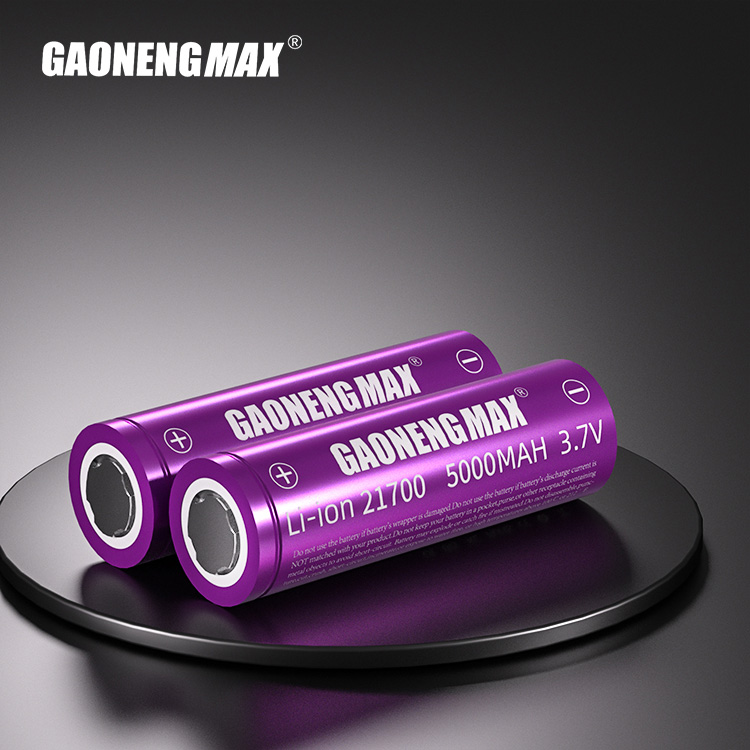
How to protect lithium batteries in mobile phone fast charging technology Lithium batteries are now high energy density and very light batteries, but due to their very active chemical properties, they themselves require safety protection and a charge and discharge protection circuit is added. Key components of charge and discharge protection circuit Mos
How to protect lithium-ion batteries in mobile phone fast charging technology
Lithium-ion batteries are now high-energy-density and very light batteries. However, due to their very active chemical properties, they require safety protection and a new charge and discharge protection circuit is added. Mosfet, a key component of the charge and discharge protection circuit, also has a certain short-circuit failure rate. Assuming that the output value of the lithium-ion battery is not large, this effect will not be reflected. But the demand for lithium-ion batteries is huge. In 2014 alone, 5.6 billion small lithium-ion batteries were sold around the world. With such a large transportation volume, even if the probability risk is 1ppm, there will be an average of 5,600 dangerous events per year. Therefore, in addition to the main protection circuit, a secondary protection is also added to further reduce the risk. Among the secondary protection components, there is generally only one component, such as a primary fuse, a PTC, and a thermal fuse. You don't fuse with PTC, you don't fuse with PTC, the protective devices compete with each other, just like different alleles compete for the same position on the chromosome. However, since various protection components are not the overall winner, a combination of multiple components can meet various usage requirements when they coexist.
However, with the rapid popularity of smartphones and the increasing capacity of mobile phone batteries, fast charging is required. Currently, there are multiple specifications such as OPPOVooc specification, qualcomm's QC2.0 specification, MTK's PumpExpressPlus specification, etc. In the case of fast charging, the current will be very large in the first 30 minutes, generally reaching about 3A.
Under the impact of high current during fast charging in the first 30 minutes, along with high temperature and temperature rise, the competitive situation of secondary protection components of lithium-ion batteries will change, and will be replaced by a form of collaboration: PTC+fuse to form a protection combination.
First, PTC+ fuses can supplement temperature protection and overcurrent protection. PTC has a temperature protection function, but due to the relatively high cooling rate, the specification selection is relatively large, the relative overcurrent protection capability is weak, and the PTC action speed is slow. The fuse (Fuse) is not sensitive to temperature and cannot provide temperature protection, but the temperature reduction rate is also very low, so a relatively small current specification can be selected, which has a relatively strong overcurrent protection capability and a much faster action speed.
Secondly, PTC+fuse will handle the low-cost solution through UL2054. In the case of high current charging, since each component of UL2054 has its own advantages and disadvantages, it is difficult for a single component to pass all UL2054 tests. One is the commonly used PTC. Since the charging current is very large, in order to ensure that it does not operate during fast charging and high temperature rise, the selected specification must reach 12066A/7A. With such large specifications, it is difficult for lithium-ion batteries to pass the LPS test of UL2054 because it is difficult to limit the current to less than 8A for 60 seconds. Second, common fuses. The biggest advantage is that it is not temperature sensitive, and you can choose 5A specifications. Fuses with ≤5A specifications are very helpful for lithium-ion batteries to pass the LPS test of UL2054; however, it is difficult to pass the 6V/1C and 6V2C overcharge test items of UL2054 because it It is not temperature sensitive and has no over-temperature protection function. The third is the three-terminal fuse. Although it can handle temperature over-temperature protection, it cannot pass the LPS test due to its current large size, up to 10A/12A; and the cost is very high. Fourth, some manufacturers use the dual-IC method, which has better results but higher costs. Assume that PTC and fuse are combined. First of all, 5A type fuses that are not sensitive to temperature can easily pass detection items such as LPS and short circuit. Then, relying on the 12066A/7A PTC and passing 6V/1C, 6V2C overcharge and other inspection items, the entire project cost is very low.
Ultimately, the PTC+ fuse protection method will be more secure than individual components. Combining these two components is equivalent to adding a new kind of protection on the basis of secondary protection, adding a heavy insurance to the safety of lithium-ion batteries, thus greatly reducing risk factors.

Popular recommendation
CR1620 battery.Sharp develops world's highest 37.7% solar cell
2023-10-08r6 battery!Yasong New Energy breaks through the bottleneck of traditional charging technology
2023-10-08CR2032 button cell.In terms of battery core technology, BYD beats Tesla?
2023-10-08AG12 battery!Power battery technology is becoming increasingly diversified, and ternary lithium batt
2023-10-08AG4 battery!Five innovative battery technologies in the future: lithium batteries have huge room for
2023-10-08CR2354 battery.Rookie in the energy industry---methanol fuel
2023-10-08Nickel Hydride Batteries.Introduction to technical rules for operating safety of polymer lithium-ion
2023-10-08AAA Ni-MH battery.Nickel-metal hydride battery technical training materials: Principles of nickel-me
2023-10-09li ion 18650 battery pack.What is important about the lithium-ion battery production process?
2023-10-08LR41 battery!Chinese and foreign R&D teams synthesize "double modification" cathode ma
2023-10-0818650 lithium-ion battery.Introduction to new battery technology after lithium-ion rechargeable batt
2023-10-08aaa alkaline battery!Online double conversion UPS power supply working mode and technical status
2023-10-08 EN
EN CN
CN