


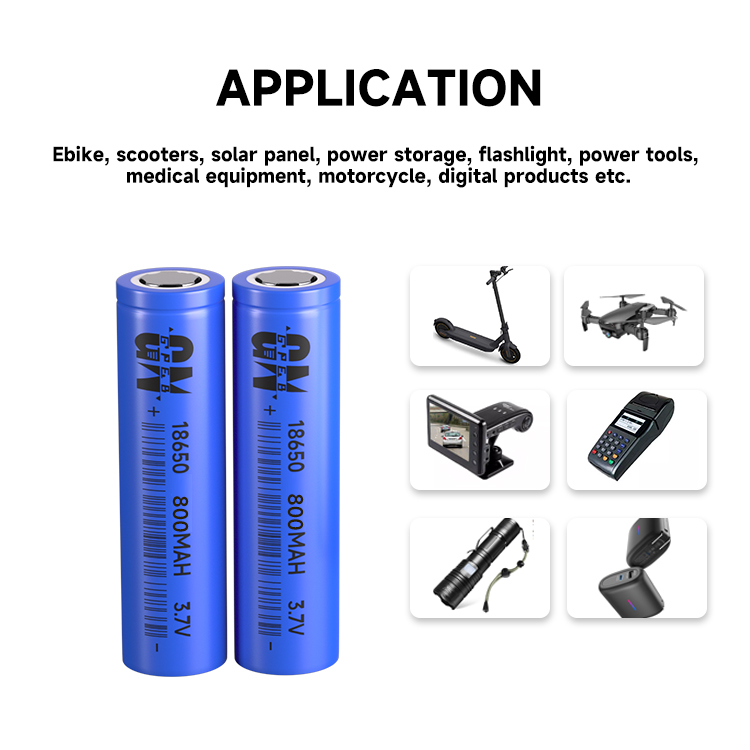
When traveling outdoors, equipment such as cameras, mobile phones, GPS and flashlights are essential. Of course, power supply and battery have become an issue that cannot be ignored, and rechargeable batteries are widely used. The editor below will popularize the knowledge about batteries for everyone.
When traveling outdoors, equipment such as cameras, mobile phones, GPS and flashlights are essential. Of course, power supply and battery have become an issue that cannot be ignored, and rechargeable batteries are widely used. The editor below will popularize the knowledge about batteries for everyone.
Temperature characteristics: Since the migration rate of rechargeable batteries in the electrolytic liquid and electrode sheets is closely related to temperature, fluctuations in temperature will significantly affect the technical performance of rechargeable batteries.
Storage temperature: Under normal circumstances, due to the liquid inside the battery, long-term storage at low temperatures will destroy the internal chemicals of the battery. Therefore, it is recommended that the storage temperature should not be lower than -20°C if conditions permit; and too high a temperature will also cause damage to the battery. The battery cannot reach its rated capacity, and the general storage temperature should not be higher than 40°C. The normal storage temperature of rechargeable batteries is -20℃~+65℃. When the temperature drops below -20℃, the electrolyte in the battery will solidify, the internal resistance of the battery will become infinite, and the battery will become unusable. When the temperature exceeds +65°C, the electrolyte will undergo side reactions to produce a large amount of gas, and the resin adhesive in the electrode sheets will also deteriorate, causing the entire battery to gradually age and decline, and even fail in the short term.
Charging temperature: Under normal circumstances, the charging temperature is 0℃~45℃.
Discharge temperature: Under normal circumstances, the discharge temperature is -20℃~65℃; but in some special cases, low-temperature batteries and high-temperature-resistant batteries can be used.
Battery packs are generally discharged before leaving the factory to prevent short circuits due to shock or other reasons during transportation. Usually new batteries are not charged or only contain about 20% of the charge.
New batteries or batteries that have not been used for a long time may not be fully activated due to the active material. They generally need to undergo two or three cycles of small current (0.1C) charge and discharge before use to reach the nominal capacity.
Batteries that are not used for a long time should be stored in a state of charge. Generally, they can be precharged to 50% to 100% before storage. It is recommended to charge the battery once every three months to restore it to saturated capacity.
Battery usage precautions:
Do not incinerate or disassemble the battery; the chemicals in it are corrosive and can harm skin and eyes.
Do not pull on the battery leads or plugs to prevent damage to solder joints and connections.
Batteries of different types cannot be mixed.
Welding on different types of batteries requires the use of connecting pieces for welding.
Fully charge with low current before first use.
Do not charge in parallel, otherwise irregular charging current will occur.
Do not use the battery in reverse or short-circuit it.
After the battery is fully discharged, the charging time should be extended to reach saturation.
Please store the battery in a cool, ventilated and dry environment with a temperature no higher than 45°C.
Do not store large numbers of batteries in dense storage when the batteries are fully or half-charged.
Do not come into contact with acidic gases and avoid sources of fire.

Popular recommendation
LR621 battery.Toyota Takeshi Yamada: Battery technology still has flaws
2023-10-14402030 battery.18650 lithium battery production process and lithium battery assembly method
2023-10-09How to reduce the consumption of platinum metal in fuel power lithium battery
2022-11-04polymer lithium battery.Cylindrical lithium battery technology, reasons for leakage of cylindrical l
2023-10-09Advantages and disadvantages of lithium battery
2022-11-1618650 lithium 3.7 battery.Balancing principle of battery pack in series UPS power supply
2023-10-08What are the advantages of lithium iron phosphate battery
2022-11-076LR61 battery.Germany develops process to extract lithium from hot water for use in manufacturing el
2023-10-0818650 battery pack.Introduction to the recycling and processing process of dry batteries
2023-10-09LR43 battery.What are the key points of the manufacturing process of 18650 lithium-ion battery?
2023-10-12Classification of ternary lithium ion batteries
2022-11-25AG5 battery!Analyze the differences in R&D and design of power lithium-ion batteries and ordinar
2023-10-08 EN
EN CN
CN